Injury Intel: How to Read Between the Lines Before the Market Moves Without You
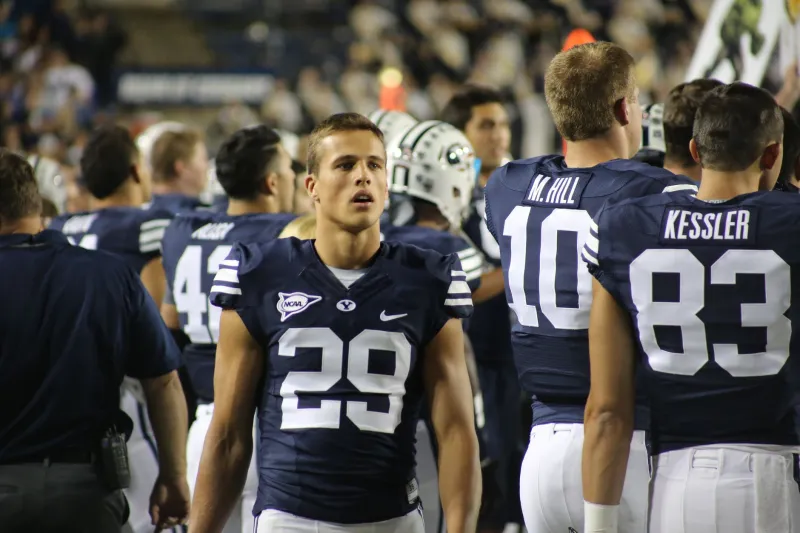
Few things move a betting line faster than a star player's status going from questionable to out. We're talking about point spreads shifting 3 to 7 points in under a minute in some cases. That kind of volatility creates opportunity — but only for bettors who understand the full lifecycle of injury information, from the moment it first leaks to the moment it becomes completely worthless as an edge.
Most bettors react to injury news. Smart bettors anticipate it. Here's how to get there.
Understanding the Injury Report Ecosystem
Every major American sport has its own injury reporting structure, and each one has a different level of transparency — or strategic opacity, depending on how you look at it.
The NFL's injury report is the most formalized. Teams are required to list players on a scale from limited participation to full participation to non-participant in practice, with game-status designations of questionable, doubtful, or out. The problem is that coaches treat this system as a chess match. Bill Belichick spent two decades making the injury report a work of art in misdirection. Listing a healthy player as limited in practice on Wednesday — a day when many teams treat practice as light conditioning anyway — is completely legal and completely misleading.
The NBA is more transparent in some ways because its injury reporting rules have tightened significantly in recent years after public pressure and bettor complaints. Teams are now required to file injury reports earlier in the day and must disclose more specific injury information. Still, "left knee soreness" tells you approximately nothing about whether a player will be on a minutes restriction or playing 38 minutes at full capacity.
MLB and NHL have looser reporting cultures. Hockey teams in particular are notorious for listing players with upper-body or lower-body injuries with zero additional detail, which is almost comically uninformative for betting purposes.
Knowing the rules of each sport's reporting system isn't optional. It's baseline knowledge.
Practice Participation: Theater vs. Signal
Here's where most casual bettors make their biggest mistake. They see a limited practice designation and immediately assume the player is compromised. Sometimes that's true. Often it's not.
Wednesday practice participation in the NFL is almost always noise. Teams routinely rest veterans on Wednesdays as part of a structured load management plan that has nothing to do with injury status. Friday practice participation is the number that matters. A player who was limited Wednesday and Thursday but returned to full practice Friday is almost certainly playing. A player who missed all three days of practice is almost certainly out, even if the team lists him as questionable to preserve strategic ambiguity.
The NBA has its own version of this. "Game-time decision" is the designation that creates the most betting volatility and the most opportunity. When a star player is listed as a game-time decision, the line often doesn't fully reflect the probability of him sitting out. Books have to balance two potential outcomes with one number. That means one side of the market is frequently mispriced — and it's usually the side that assumes the player will play, because the casual public bets toward optimism.
The sharp move in NBA game-time decision situations is often to wait. Monitor the starting lineup announcements, which come out roughly 30 to 45 minutes before tip-off. If you can get a bet placed in the window between lineup confirmation and the opening tip — when the sportsbook is still adjusting — you're operating with information the line hasn't fully processed yet.
The Information Timeline and Where the Edge Lives
Think of injury information as a perishable good. It has maximum value the moment it's created and loses value rapidly as it spreads.
Here's a rough timeline for how injury information flows in the NFL:
- Practice report drops (Wednesday–Friday): Immediately processed by sharp bettors and professional handicappers. Lines begin to move within minutes.
- Beat reporters confirm with sources: Second wave of movement as the information gets amplified on Twitter/X and injury-tracking services.
- Major outlets publish the story: By now, the line has already moved most of the way. Casual bettors see the headline and bet into a number that's already been adjusted.
- Official designation confirmed Friday evening: Final adjustment. If you're acting on this, you're last in line.
The edge lives in the first 15 minutes after a significant practice report drops or a credible beat reporter tweets something that contradicts the official report. That's a narrow window. Capturing it requires having your sources set up before the information matters, not after.
The accounts worth following are team-specific beat reporters who have direct access to coaches and training staff — not national analysts who are aggregating the same information everyone else already has. A beat reporter for the San Francisco Chronicle covering the 49ers has a fundamentally different quality of information than a national NFL analyst. Follow the former, not the latter.
When Injury News Stops Being an Edge
This is the part nobody wants to hear: by the time you read about an injury in your morning news feed, it's almost certainly too late to profit from it directly.
The trap bettors fall into is assuming that just because they personally just learned something, the market doesn't know yet. In practice, the sportsbook line absorbed that information hours earlier. Betting into a number that's already priced in an injury isn't getting an edge — it's just betting at a worse number than you would have gotten before the news broke.
There's a second trap: overreacting to backup player quality. When a star running back goes down, bettors instinctively hammer the opposing defense. But backup running backs in the NFL are often capable players who simply weren't getting reps. The market sometimes overcorrects, moving the line more than the actual talent drop-off justifies. The value in those situations can be on the team that just lost their starter — not because the injury doesn't matter, but because the public has pushed the line past where it should be.
Building an Injury Intelligence Routine
You don't need to be plugged into an injury intelligence service that costs $500 a month. You need a consistent routine that puts you ahead of the average bettor.
Start by identifying two or three beat reporters for each team in the sports you bet most frequently. Follow them directly on social media. Set notifications if you're serious about catching information early. Check official team injury reports the moment they drop — not when the sports news cycle gets around to covering them.
For NBA, use the league's official injury report page, which updates in real time and is more reliable than secondary aggregators. For NFL, cross-reference the official report with practice video access — many teams allow limited camera access to portions of practice, and observant reporters will note which players are working in pads versus in shells.
The goal is to build a system where you're making decisions with better information than the market average — not because you have secret access, but because you've built the habit of checking primary sources before secondary ones.
At BJ88Bet, we say bet bold, play smart. Playing smart on injury news means knowing exactly how stale your information is before you act on it.