Coast-to-Coast and Completely Mispriced: How Travel Schedules and Tip-Off Times Create Betting Edges the Market Ignores

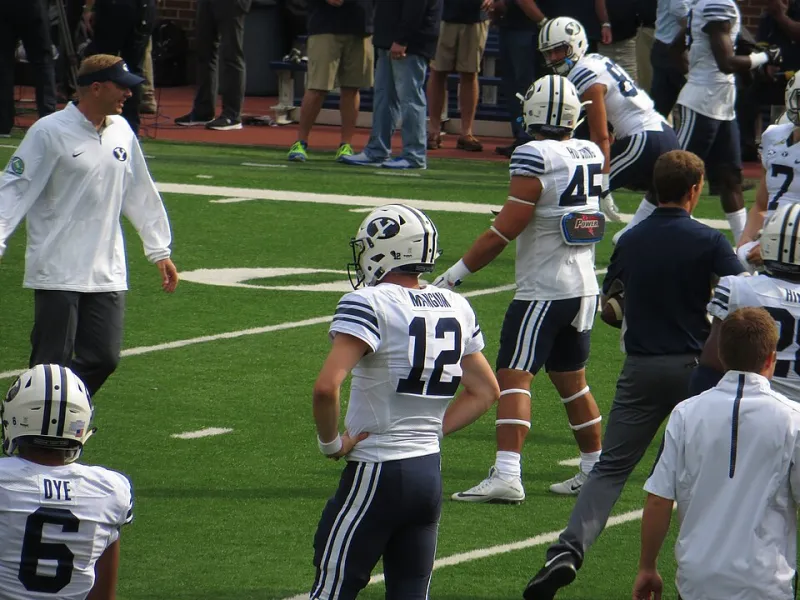
Photo: SamKramer123, CC BY 4.0, via Wikimedia Commons
Picture this: the Los Angeles Rams are flying to New Jersey for a 1 PM ET kickoff on Sunday. That's a 10 AM local time start for a team whose biological clocks are set to Pacific time. They're landing Saturday night, sleeping in a hotel, and waking up before dawn to prepare for a professional football game.
The line? Might not reflect any of that.
This is one of the most consistently underpriced factors in sports betting — not because it's secret, but because most bettors don't bother to factor it in systematically. And the ones who do? They've been quietly picking up value for years.
The Science Behind Time Zone Fatigue
This isn't folk wisdom. There's actual research on circadian rhythm disruption and athletic performance. Studies from the Journal of Sleep Research and sports science publications have consistently shown that westward travel is easier on the body than eastward travel — meaning a West Coast team flying east deals with more physiological disruption than an East Coast team flying west.
The reasons are biological. Your body's internal clock has an easier time extending the day (going west) than shortening it (going east). East Coast teams playing late games on the West Coast often perform better than their lines suggest. West Coast teams playing early East Coast games often perform worse.
Over a large enough sample, these patterns show up in the data. We're not talking about a massive edge on every game — we're talking about a 1-2 point swing in expected performance that compounds over the course of a season when you're betting consistently.
Early Kickoffs: The NFL's Quiet Trap
The NFL's 1 PM ET Sunday slate is a goldmine for this kind of analysis. For East Coast teams, it's a normal start. For West Coast and Mountain time zone teams, it's the equivalent of playing at 10 AM local time.
Here's what the data tends to show: West Coast teams playing in the early Sunday window — particularly in the eastern half of the country — cover at a noticeably lower rate than their point spreads imply. The spread is built on the team's overall quality, recent form, and matchup. It's not always built on whether the players had their bodies adjusted to a 10 AM kickoff.
This isn't a slam dunk every time. You need other factors to align. But when you see a West Coast team traveling east for a noon kickoff, that's a flag worth putting in your notes.
Back-to-Back Travel in the NBA: Where This Gets Really Interesting
The NBA schedule is where time zone analysis gets genuinely surgical. Teams play 82 games in roughly six months, which means heavy travel, frequent back-to-backs, and brutal stretches where a team might play in three cities in four nights across multiple time zones.
Sportsbooks price back-to-backs — somewhat. The rest of the schedule context? Not always.
The specific situation to watch: a team playing the second game of a back-to-back on the road, in a different time zone than where they played the night before, against a rested opponent. The books will move the line for the back-to-back factor, but they don't always fully account for the cumulative travel fatigue when that back-to-back involves cross-country flights.
A team that played in Boston on Tuesday night, flew to Phoenix Wednesday, and is tipping off Thursday? That's a different animal than a team playing its second straight home game. The line doesn't always know the difference.
How to Build a Travel Fatigue Tracker
You don't need a subscription service to do this. A basic spreadsheet and some weekly prep work will get you most of the way there.
For each sport you're betting, track the following before the week's games:
Direction of travel. East-to-west or west-to-east? Eastward travel hits harder on early starts.
Time zone differential. A one-hour shift is barely noticeable. A three-hour shift matters, especially for morning or early afternoon games.
Days since last game. A team with three full rest days absorbs travel better than a team that played 36 hours ago.
Home vs. away context. Road teams are already dealing with unfamiliar environments. Add time zone disruption on top of that and you're stacking factors.
Opponent rest situation. The edge isn't just about the fatigued team — it's about the matchup. A rested home team against a travel-worn visitor is a much stronger signal than a fatigued team playing another fatigued team.
Once you're tracking this consistently, you'll start to see patterns emerge. Certain franchises are better at managing travel than others — teams with strong organizational infrastructure, charter flights, and experienced coaching staffs adapt more efficiently. Factor that in too.
The Scheduling Situations That Produce the Clearest Edges
Based on historical performance data across NFL and NBA seasons, a few scenarios consistently produce exploitable lines:
- West Coast NFL teams playing before noon ET, on the road, in weeks 1-4 (before travel rhythms are established)
- NBA teams on the fourth game of a five-game road trip, particularly when the trip crosses multiple time zones
- Thursday Night Football teams that played the previous Sunday on the opposite coast — the short week plus travel is a brutal combination
- College football teams from the Mountain West or Pac-12 playing early-morning bowl games in eastern cities — these teams aren't used to early starts and the adjustment is real
Playing It Smart at BJ88Bet
The beauty of this edge is that it's not glamorous. There's no dramatic storyline attached to a time zone disadvantage. It doesn't make highlight reels. The public doesn't talk about it, which means the lines don't always fully price it in.
Betting smart means finding spots where the market's assumptions diverge from reality. Travel fatigue and game timing are exactly those spots. Do the scheduling homework before the week starts, identify the situations where the context is stacked against a team, and let the math do its quiet work over time.
The clock is always ticking. Might as well make sure it's ticking in your favor.